Engine-derived ROI benchmarks for Savannah-area short-term rentals, single-family rentals, and small commercial properties. Numbers come from running real fixtures through the Cost Seg Smart engine, same engine that produces your actual study. Studies from $495.
Operated by Cost Seg Smart. Studies are IRS-aligned with engineer review included. 5 fixture benchmarks computed May 2026.
Numbers above are engine-estimated outputs from running 5 representative fixtures, not promises about what your specific property will produce. Results vary based on actual property condition, year built, renovation history, county assessor data quality, and rental treatment (STR vs LTR). Full per-fixture table, neighborhood breakdown, and downloadable CSV/PDF on the Savannah cost seg benchmarks page.
Savannah's Historic District is the most architecturally distinctive STR market in the United States, 22 city squares surrounded by 1800s townhomes, Italianate residences, and carriage houses, all under strict historic-preservation review. This shapes the cost-seg case in a specific way: original 1800s structural construction (heart-pine framing, original masonry, period plumbing and electrical) reclassifies poorly. The cost-seg math here is overwhelmingly driven by post-2000 renovation cost, where heavy historic-preservation-compliant renovation work has been layered onto the original structural shells.
Georgia's partial decoupling from federal §168(k) is the state-tax wrinkle. GA requires an addback for federal bonus depreciation on the Georgia return, with the addback amount recovered over the regular MACRS schedule for state purposes. For 2025+ acquisitions under OBBBA's 100% federal bonus, the GA-side timing mismatch is modest in absolute dollars at the 5.49% flat rate, but should be modeled into your CPA workflow. The federal §168(k) benefit at 100% is unaffected.
The buyer profile is unusually culturally-oriented. Savannah Historic District buyers are frequently mid-to-upper-income East Coast or Southeastern owners purchasing for the architecture, food scene, and cultural tourism demand, not for pure cash-flow optimization. This supports longer hold periods than typical STR markets and means cost-seg recapture risk is less of a constraint. Tybee Island (Chatham County coastal sub-market) operates as a separate beach STR market with its own permit regime and lower historic-preservation friction.
Decoupling: Georgia's bonus depreciation conformity has been modified multiple times. Verify current-year treatment with your CPA. The federal deduction is unaffected.
Verify with your CPA. State tax conformity rules for federal §168(k) bonus depreciation are adjusted frequently, multiple states have modified their treatment two or more times in the past decade. The general framing on this page reflects our understanding as of May 2026, but you should always verify current-year treatment with a qualified CPA or tax attorney before relying on specific dollar projections for your situation.
These aren't rough estimates. Each fixture was run through the same engine that produces your actual study, RSMeans 2024 base costs, BLS PPI time index, county assessor land allocation, IRS Pub. 946 / Rev. Proc. 87-56 MACRS classification, 100% bonus depreciation per OBBBA.
| Purchase price | $985,000 |
| Depreciable basis | $817,747 |
| Land allocation | 17.0% |
| 5-year reclassified | $131,164 |
| 15-year reclassified | $56,057 |
| Total reclass | 23.3% |
| Purchase price | $685,000 |
| Depreciable basis | $564,303 |
| Land allocation | 17.6% |
| 5-year reclassified | $87,824 |
| 15-year reclassified | $37,460 |
| Total reclass | 22.6% |
| Purchase price | $585,000 |
| Depreciable basis | $476,307 |
| Land allocation | 18.6% |
| 5-year reclassified | $73,028 |
| 15-year reclassified | $31,710 |
| Total reclass | 22.3% |
| Purchase price | $525,000 |
| Depreciable basis | $435,435 |
| Land allocation | 17.1% |
| 5-year reclassified | $36,581 |
| 15-year reclassified | $30,932 |
| Total reclass | 15.5% |
| Purchase price | $685,000 |
| Depreciable basis | $548,206 |
| Land allocation | 20.0% |
| 5-year reclassified | $97,836 |
| 15-year reclassified | $35,352 |
| Total reclass | 24.7% |
Cost-seg ROI varies more by neighborhood than by city. Savannah's 5 sub-markets each have their own land-allocation pattern and property archetype:
| Neighborhood | Typical value | Typical land allocation | Profile note |
|---|---|---|---|
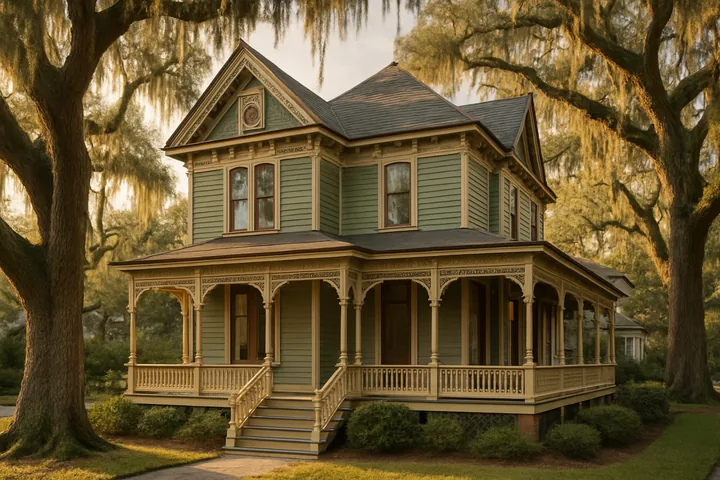
| Historic District (square-anchored) | $985,000 | ~34% | Heart of Savannah's historic core, 1800s townhomes, carriage houses, and Italianate residences arranged around the city's iconic squares. Highest land allocation due to historic-district scarcity. Renovation-cost-seg drives the math. |
| Victorian District / Thomas Square | $685,000 | ~28% | Late-1800s Victorian and Eastlake stock just south of the Historic District. Heavy post-2010 renovation activity. Mid-tier land allocation. Active STR rental market. |
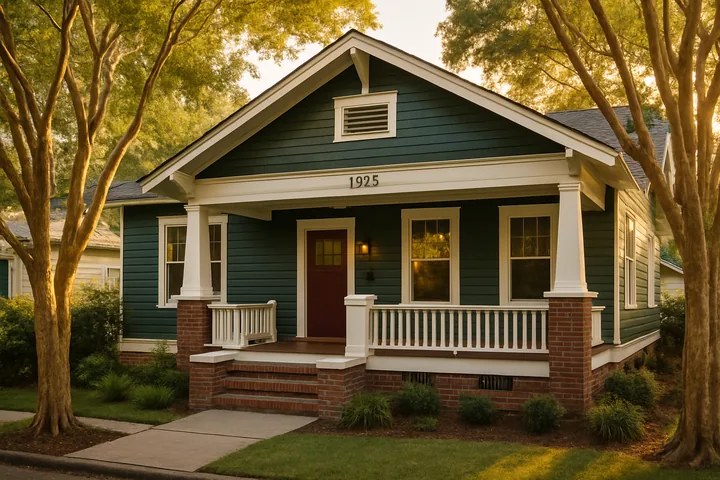
| Starland District | $585,000 | ~26% | Emerging arts-district neighborhood with 1920s SFR stock undergoing gentrification-driven renovation. Lower land allocation than Historic District. Mix of fix-and-flip and STR. |
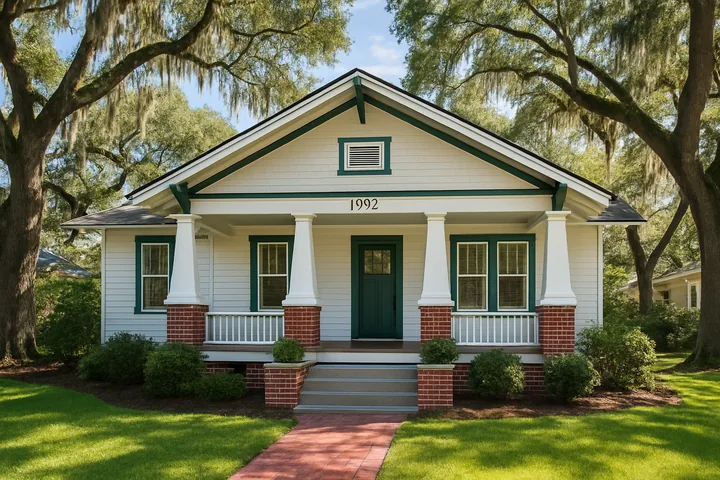
| Ardsley Park / Chatham Crescent | $525,000 | ~24% | Historic streetcar-suburb residential south of midtown. 1920s–1940s SFR and bungalow stock. Mid-tier land allocation. Mix of LTR and STR with HOA-free flexibility. |
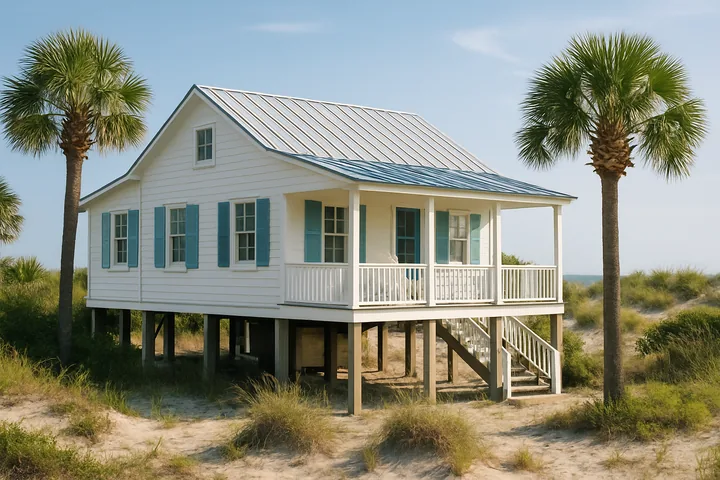
| Tybee Island (Chatham County coastal) | $685,000 | ~22% | Coastal barrier-island sub-market east of Savannah. Beach SFR and condo stock. Lower land allocation than Historic District. Active beach STR market subject to Tybee's specific STR ordinance. |
Methodology note: "Typical land allocation" reflects baseline patterns for the sub-market. For ultra-premium or resort-tier inventory where reconstruction cost exceeds 2.0× the implied depreciable basis after subtracting baseline land, the engine applies a premium land floor (~50%) to keep the study within audit-defensible territory. This means individual fixture engine output may exceed the neighborhood typical, especially for resort-tier ski-in/ski-out, beachfront, or view-premium product where land scarcity dominates value. See the /data/ page for per-fixture land-source attribution. Results vary substantially by specific property condition, renovation history, and assessor records.
City of Savannah operates a Vacation Rental ordinance with permit requirements, density caps in certain residential zones (particularly the Historic District and Victorian District), and annual renewal compliance reviews. The Historic District's STR permit availability is constrained, verify permit availability before underwriting STR-intent acquisitions in the Historic District. Chatham County unincorporated areas and Tybee Island operate distinct STR regulatory regimes. Tybee Island has its own short-term vacation rental ordinance that has been periodically tightened. Historic-preservation review is a real constraint on Historic District and Victorian District renovation, exterior modifications, window replacements, and even paint color changes require Historic Review Board approval. Material participation under §469 is achievable for self-managing owners; document hours contemporaneously.
For the full IRS-rule reference layer (§168(k), §469 material participation, state conformity), see irsdepreciationrules.com, our open reference site.
Modestly. Georgia requires an addback for federal §168(k) bonus depreciation on Schedule 1 of the GA return, with the addback amount recovered over the regular MACRS schedule on the state side. For 2025+ acquisitions under OBBBA's 100% federal bonus, the GA-side timing impact is modest given GA's 5.49% flat rate. For a Savannah owner taking $80,000 of accelerated reclassification, federal Year-1 savings at 37% is $29,600. The GA-side total savings is approximately $80,000 × 5.49% = $4,392 total, but the GA acceleration is partially deferred, a portion captures in Year 1 and the remainder recovers over the regular MACRS schedule for state purposes. Total GA savings equals full conformity ($4,392); only the timing is mismatched. Verify current GA treatment with your CPA, Georgia has adjusted conformity multiple times.
Not the engine's component analysis or MACRS classification directly, Historic Review Board approval is required for exterior modifications and certain interior structural work, but doesn't change how the depreciable basis is allocated by recovery period. What it does affect: the renovation cost pool. Historic-preservation-compliant renovation work is typically more expensive than equivalent non-restricted work, period-correct materials, approved-contractor labor, longer review timelines all increase renovation cost. Higher renovation costs mean larger renovation pools, which means larger 5/15-year reclassification amounts (the renovation pool is allocated more aggressively than the original construction). For a Historic District buyer planning substantial renovation, the preservation premium on renovation cost partially offsets the high base land allocation in the reclassification math.
Different shapes. Historic District: 1800s structural shell that reclassifies poorly + heavy post-2000 renovation pool that drives 60–75% of accelerated reclass + high 34% land allocation that compresses reclass ratio. Tybee Island: 1990s–2010s beach SFR construction with lower 22% land allocation, cleaner new-build reclass ratios, less renovation-cost-pool dependency. For a $685K Tybee beach cottage, engine reclassification ratio typically runs 22–28%; for a $685K Victorian District renovated SFR, the same dollar amount produces a 24–30% reclass ratio when renovation cost is well-documented. Both work; the optimization depends on buyer preference (historic urban vs beach), STR-permit availability (more constrained in Historic District), and operating-economics overlay.
Yes, meaningfully. The City of Savannah's Vacation Rental ordinance establishes density limits in the Historic District and certain Victorian District zones, with permit availability tied to existing inventory at the property level. Permits transfer with property ownership in most cases but new STR conversions in capped zones can be denied. Verify permit status and history before closing on any Historic District or Victorian District property with STR intent. Properties with verified active permits trade at a premium to otherwise-identical non-permitted properties. For cost-seg purposes, permit-denial risk affects hold-period assumptions, model conservative 5–7 year STR-revenue assumptions in capped zones rather than 10+ year horizons.
Yes, Tybee Island is a separate municipality with its own STR ordinance. Tybee has historically maintained relatively permissive STR rules but has periodically tightened density and permit requirements. Tybee STR operations are subject to Tybee's permit system, Georgia state sales tax, and Chatham County lodging tax, distinct from the City of Savannah's regulatory regime. Cost-seg engine output is identical between Savannah Historic District and Tybee Island properties, both use the same MACRS classification and §168(k) treatment. What differs is the permit-and-density regulatory layer that affects hold-period and operating economics.
More general cost-seg questions answered at costsegsmart.com/faq/.
Cost Seg Smart studies are IRS-aligned, engineering-reviewed, and include written audit defense. Pricing is transparent and starts at $495 for residential properties under $300K, full pricing on the main site.